 COME
COMECOME App, APK and Website Explained: Repeated and Joined Names
Distinguish the product interface, Android package and browser page so that each action has a clear result. A search contains the name twice or joins COME and app into one word.
Three terms describe different objects
COME app describes the application experience and its controls. An APK is a package Android can use for installation. A website is a resource opened by a browser. A visit can move through all three, but none of the words proves that the other stages have happened. Start by identifying which object is in front of you.
A product page can contain categories, cards and account controls while still being a webpage. Conversely, an installed application can use network content. A familiar appearance does not settle the entry method. Browser history and downloads explain browser events; Android's installed-app information answers whether an application is present on the device.
Understand what the interface organises
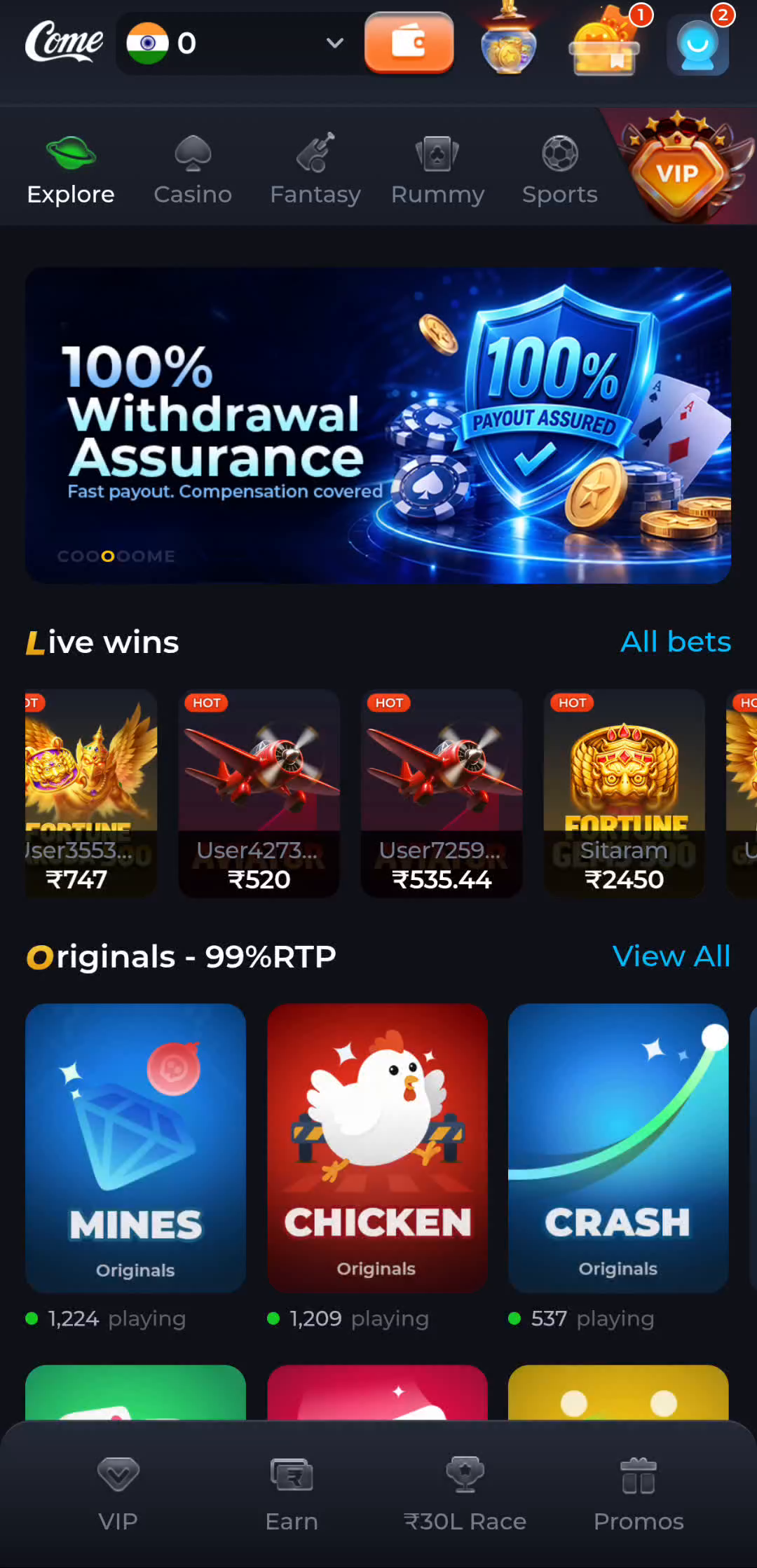
The illustrated COME home screen names Explore, Casino, Fantasy, Rummy and Sports. The categories organise areas to browse. Within the home view, individual cards such as Mines, Chicken and Crash identify items whose own information matters. A category is not a complete list of rules, and an item card is not automatically another Android download.
Account, Transactions, Game History, Contact CS and Settings appear in a separate profile menu. Those tools concern identity, records, help and preferences. Use their labels to choose where to look. If your problem concerns a personal record, starting a new file transfer does not retrieve that record or resolve the account context.
Attach a checkpoint to each action
Opening the product entry should produce a usable page. Choosing an Android option may begin a transfer that should reach completion. Opening a completed package should lead to an installer result. Launching the installed app should produce a usable first screen. Successful sign-in, when required for a task, is a further checkpoint rather than part of the installation result.
Use those stages to describe a difficulty precisely. A page that loads while no transfer starts is different from a transfer that fails halfway. An installed app with an account question is different again. Record the last completed checkpoint before selecting a guide; it prevents a setup question from absorbing unrelated navigation or account work.
Apply this check to your visit
A search contains the name twice or joins COME and app into one word.
Repeated or joined wording can describe the same intended search, but the result still needs to match the product you meant. Read the app description, destination and visible controls. Do not infer a bundle of multiple applications, an upgraded edition or a separate publisher merely from repetition in the query.
The checkpoint for this guide is specific: distinguish the product interface, Android package and browser page so that each action has a clear result.
- Name the object: webpage, file, installer or product screen.
- Locate the category row and the separate profile tools.
- Identify the last completed stage.
- Choose a next step that changes that stage.
A browser tab containing game cards may be ready for browsing even though no Android package has been saved.
Questions about this task
Does an app-style page prove installation?
No. Check Android application information and the file-transfer history separately.
Is an APK a native iPhone installer?
No. APK is an Android package format; other platforms need their own supported options.
A related next step
Match a COME spelling variant to the product you intended before choosing an entry. A search contains the name twice or joins COME and app into one word.